How Calhoun Square Became Seven Points, and Why It Still Sits Half-Empty
Business Greater Uptown & Nearby
An explainer on the mall at the center of Uptown's identity, from 1984 to today.
A mall built for a neighborhood
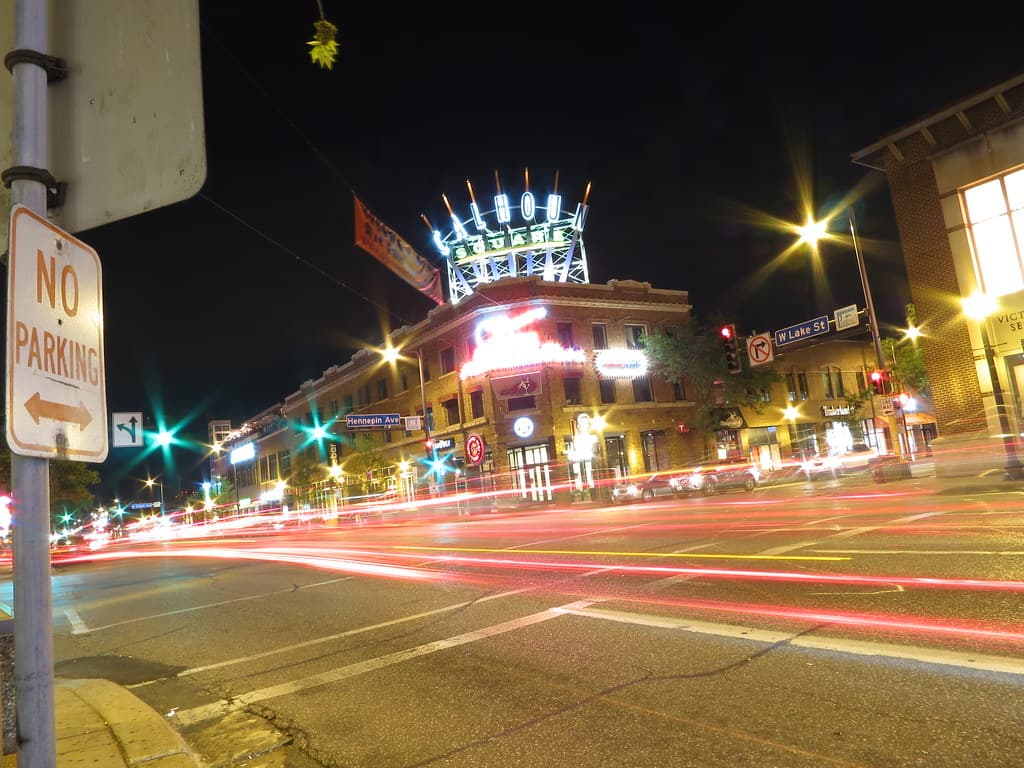
When Calhoun Square opened in February 1984 at the southeast corner of Hennepin Avenue and West Lake Street, it was meant to anchor Uptown's main intersection. For years it functioned as a community center as much as a shopping mall — a motley collection of mostly local names that gave the district a literal middle, a place where the neighborhood's commercial life converged.
The 172,000-square-foot center was never a generic suburban mall. Its mix of restaurants, shops and gathering spaces made it a destination in its own right, the kind of place residents passed through almost daily and visitors sought out as the heart of Uptown.
A rename and a reckoning
In 2020 the property was rebranded as Seven Points, a name drawn from the illuminated crown atop the building, as new ownership signaled a coming reinvention. The rechristening also quietly retired a name — Calhoun — that had grown contested, mirroring the same reconsideration that led the nearby lake to be renamed Bde Maka Ska.
But a new name could not fix the underlying problem. National retailers had been peeling away for years, and anchor departures left growing gaps in the center's tenant roster. The rebrand promised momentum the market did not deliver, and the building entered a long stretch of half-occupancy.
Calhoun Square was the heart of Uptown for a generation. The challenge now is giving it a second life that fits the neighborhood it serves.— a longtime observer of the Uptown commercial district
Why it still sits half-empty
Several forces converged to leave the center where it is. Shifting retail habits hollowed out enclosed malls everywhere; the surrounding corridor absorbed years of construction and a wave of closures; and ambitious redevelopment plans for the block were announced, paused and revised more than once, freezing the property in a kind of limbo while the future was negotiated.
The result is a paradox at Uptown's busiest corner: a large, visible building that is neither fully alive nor truly vacant. A handful of small businesses keep its doors open, but the upper floors and former anchor spaces tell the story of a retail model that the neighborhood has outgrown.
More in the directory
The neighborhood, in your inbox
Free. No paywall. Pick the topics you want — we send what’s happening this week.