Event East Isles
Lyn-Lake's Street Art Series Marks Its Eighth Year
The free mural and graffiti festival celebrates Twin Cities culture each July.
Friday, July 11, 2025 9:15 AM East Isles
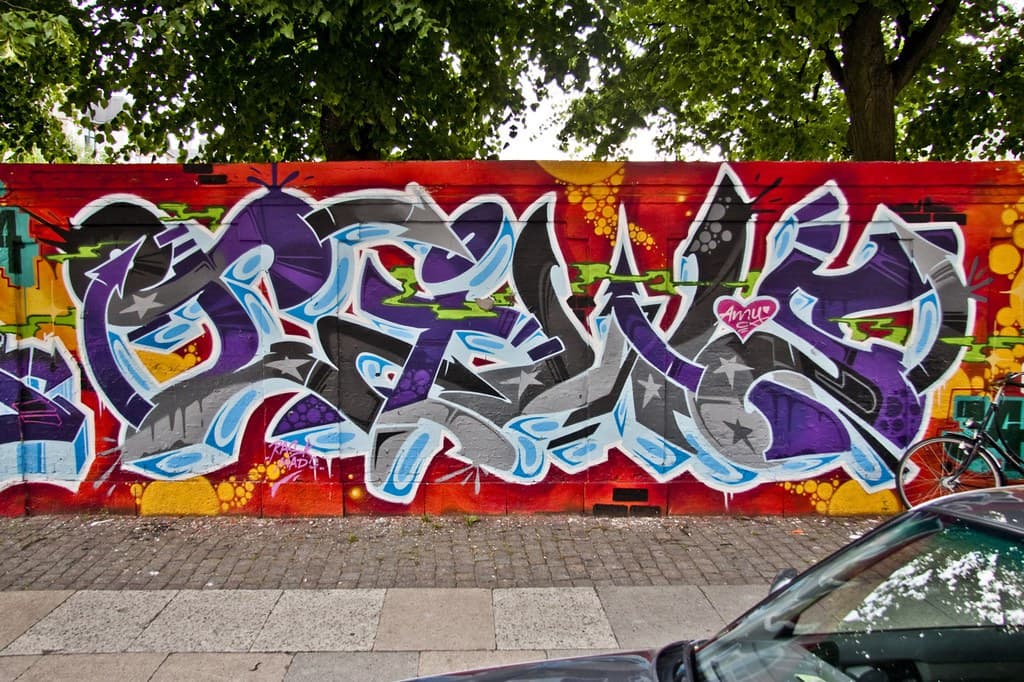
A short distance from Lowry Hill, the street-art scene runs on a different rhythm than the Walker's galleries. The Street Art Series, formerly the Lyn-Lake Street Art Series, returned for its eighth year in July - a free graffiti jam and mural festival celebrating the culture and history of street art in the Twin Cities. Where the museum acquires and conserves, this scene makes work in the open and lets it weather.
The two exist in the same city and rarely in the same conversation, which is exactly why the festival is worth paying attention to.
Walls as legitimate canvas
Run by artists for artists, the festival treats public walls as legitimate canvas rather than blight to be scrubbed away. Over a long weekend, aerosol work goes up in real time, and crowds gather to watch murals appear hour by hour - a kind of public art-making that a gallery, by its nature, cannot offer. The work is made in front of you, fast, and the process is half the show. There is no velvet rope and no wall label; there is a can of spray paint and a wall.
That openness reframes a form often treated as vandalism. By staging the work as a festival - sanctioned, celebrated, watched by families - the series makes the case that street art is a discipline with its own history, techniques and stars, deserving of the same respect as the bronze across town.
“One scene commissions monumental bronze; the other paints on found surfaces. The city's art identity needs both.”
A contrast, not a conflict
The contrast with the museum down the hill is instructive rather than oppositional. One scene commissions monumental bronze and installs it in a manicured garden; the other paints on found surfaces and lets the city be its gallery. A healthy art ecosystem needs both - the institution that preserves and the street that improvises, the work you buy a ticket to see and the work you stumble on. Neither is a substitute for the other, and a city with only one would be poorer for it.
The festival also keeps a local lineage visible. By celebrating the culture and history of Twin Cities street art specifically, it insists that this work has roots here - that it is part of the region's art story, not an import or an afterthought.
Art on a wall you pass every day
For residents of the surrounding neighborhoods, the series is a standing reminder that contemporary art is not confined to ticketed institutions. Sometimes it shows up on a wall you pass every day, made by someone from a few blocks over, free to anyone who looks up. That accessibility is the point: the work comes to the street rather than asking the street to come to it.
Other events
The neighborhood, in your inbox
Free. No paywall. Pick the topics you want — we send what’s happening this week.