Event Cedar-Isles-Dean
Como-Harriet Streetcar Rolls Again Between the Lakes
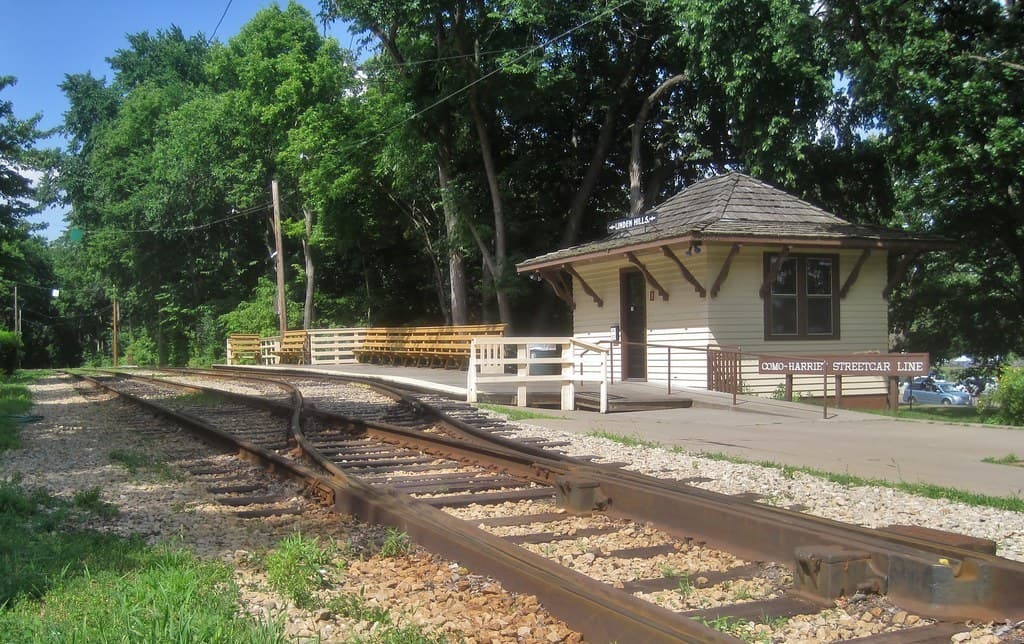
The restored trolley carries riders along the old line near Lake Harriet.
Saturday, June 6, 2026 1:00 PM–5:00 PM Cedar-Isles-Dean
The restored Como-Harriet streetcar is running again this season, carrying riders along a preserved stretch of track near Lake Harriet. Operated by the Minnesota Streetcar Museum, the trolley is a living piece of the transit system that once knit the lake neighborhoods together.
The short ride is as much attraction as transportation, threading between the lakes on a line that dates to the era when streetcars — not cars — moved the city. For a few minutes, riders travel the way their great-grandparents might have, on a vehicle lovingly kept running by volunteers.
A ride into the past
The Como-Harriet line is a remnant of a once-vast network. In the streetcar era, Minneapolis and St. Paul were laced together by hundreds of miles of track, and it was the trolley, more than anything, that opened the lakes neighborhoods to development in the first place. Thomas Lowry, whose name sits atop the hill, made his fortune in exactly this business. The preserved line is a small, tangible piece of that history still in motion.
The Minnesota Streetcar Museum's volunteers narrate the ride, pointing out what the route looked like a century ago and how the cars themselves were built and run. It is history you experience rather than read — the rattle of the wheels, the conductor's bell, the slow roll between the lakes.
An easy outing with a built-in lesson
The trolley pairs naturally with a Lake Harriet Bandshell concert evening or an afternoon on the lake, making it easy to fold into a day already spent near the water. For families, it is a low-key outing with a lesson tucked inside: a reminder, rolling past on steel wheels, of how different the neighborhood's commute once looked — and how much of the city's shape the streetcar drew.
Kids tend to love it for the simplest reason — it is a train you can ride — while the adults get the history. That dual appeal is the museum's quiet genius: it preserves something real and makes it fun at the same time.
Why preservation like this matters
It would have been easy to let the last of the streetcars disappear entirely. That a stretch of working line survives near Lake Harriet is the result of decades of volunteer labor and a deliberate choice to keep a piece of the city's past usable rather than merely remembered. In a neighborhood whose very layout was drawn by the trolley, that continuity is worth something.
It also makes a quiet point about transit. The lakes were built to be reached without a car, and the streetcar is a reminder that a walkable, transit-rich neighborhood is not a new idea here — it is the original one.
Other events
The neighborhood, in your inbox
Free. No paywall. Pick the topics you want — we send what’s happening this week.