NeighborhoodLowry Hill
How Spoonbridge and Cherry Became Lowry Hill's Front Yard
The story behind the giant spoon that has anchored the Minneapolis Sculpture Garden since 1988.
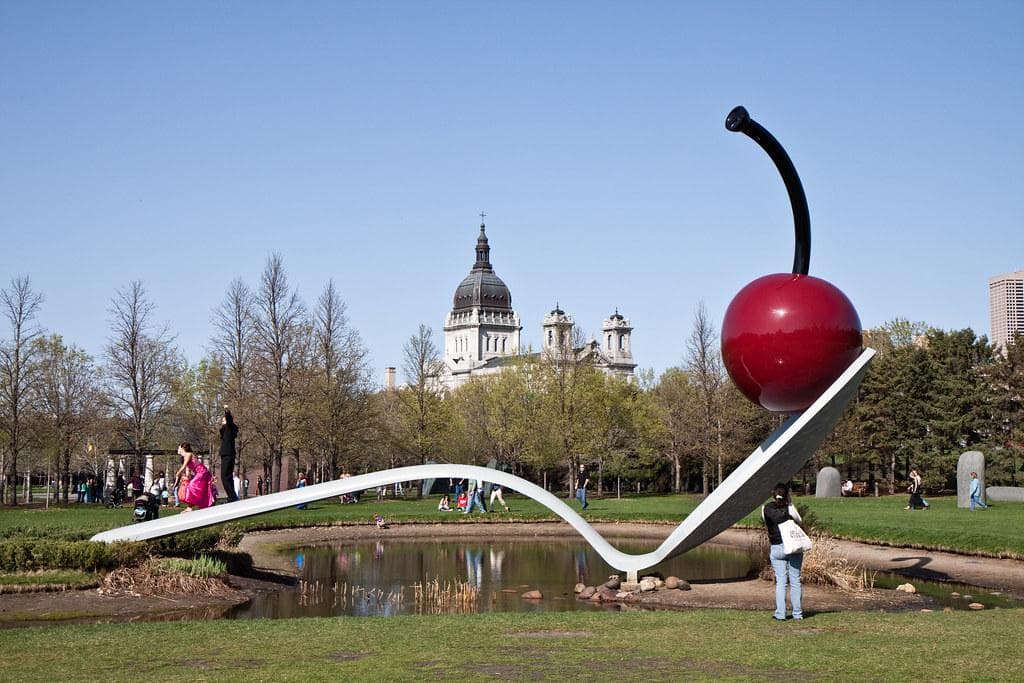
It is the first thing visitors photograph and the last thing they forget: a 52-foot spoon cradling a bright red cherry, set in a reflecting pond at the foot of Lowry Hill. Spoonbridge and Cherry, by Claes Oldenburg and Coosje van Bruggen, was the first work the Walker Art Center commissioned for the Minneapolis Sculpture Garden, and it has defined the place since the Garden opened in 1988.
Nearly four decades on, it is so woven into the city's image that it is worth recovering how strange and how playful the idea behind it really was.
A novelty spoon, blown up
The sculpture began, as the artists told it, with a novelty spoon Oldenburg had once kept resting on a pool of fake chocolate - the kind of everyday object he had spent a career enlarging. Coosje van Bruggen added the cherry as a deliberately cheeky note, a counterpoint to the orderly, formal layout of the Garden's hedges and gravel paths. The result, funded by a gift from collector Frederick R. Weisman, was a fountain that is at once monumental and grinning.
That collaboration is the key to the piece. Oldenburg brought the scale and the obsession with the ordinary; van Bruggen brought the wit, the title and the mischief. Neither alone would have produced quite this object - grand enough to anchor a sculpture garden, light enough to make a child laugh.
“Oldenburg wanted scale; van Bruggen wanted mischief. The cherry is the argument they won together.”
More front yard than museum object
For the neighborhood, the piece functions less like a museum object behind a rope and more like a shared front yard. Wedding parties, prom groups and tourists with rolling suitcases cycle through all summer, and locals learn to time their visits around them - early mornings, weekday evenings, the quiet of winter. It is a public landmark in the fullest sense: a place people gather, pose, propose and picnic, not just a sculpture they file past.
That is an unusual fate for a work of contemporary art. Most sculpture asks to be contemplated; this one invited a city to live around it, and the city accepted. The spoon became less a thing to look at than a place to be.
The detail most people miss
Nearly four decades on, the cherry still mists itself with a fine spray of water - a detail many first-time visitors miss until they stand close enough to feel it. The spray keeps the cherry glistening, as though fresh-rinsed, and it is the kind of engineered touch that explains why the sculpture has aged so gracefully: the artists thought not just about how it would look in a photograph, but about how it would behave in light, water and weather over the long haul.
For neighbors, that mist is the reward for proximity - the in-joke you share with a visitor who thinks they already know the sculpture from the postcard. Walk down close, on a still day, and the most photographed object in the state hands you a small secret the cameras never catch.
NeighborhoodLowry Hill
Related stories

Neighborhood
Lowry Hill and East Isles Land on Patch's List of Minnesota's Most Expensive Neighborhoods
Lowry Hill and East Isles rank among Minnesota's most expensive neighborhoods according to Patch's analysis of Niche's 2026 data.
Neighborhood
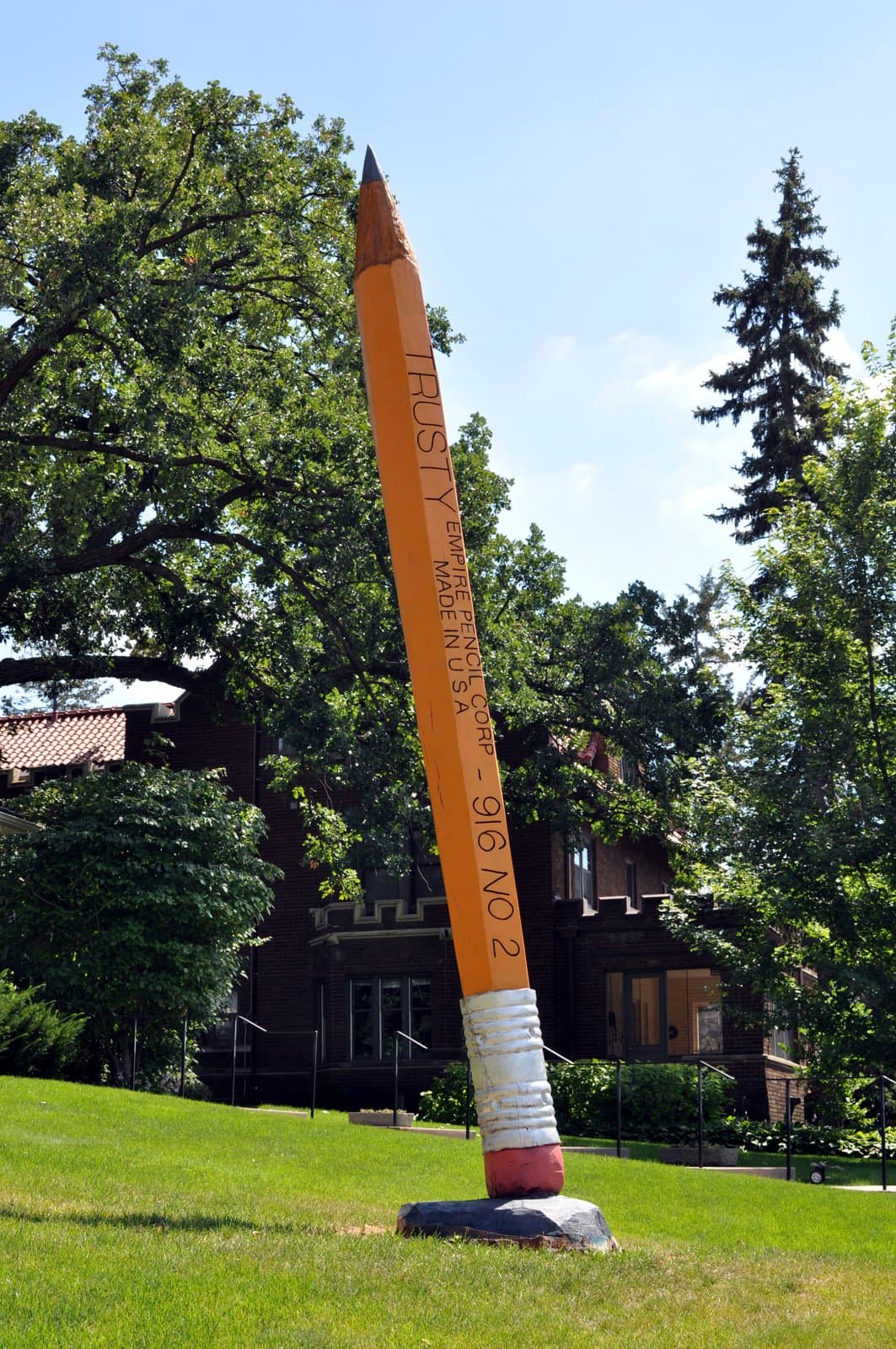
Community celebrates Lake of the Isles Pencil's 5th sharpening
Thousands gathered in East Isles on June 6, 2026, to watch the annual ceremonial sharpening of Minneapolis' giant pencil sculpture.
Neighborhood
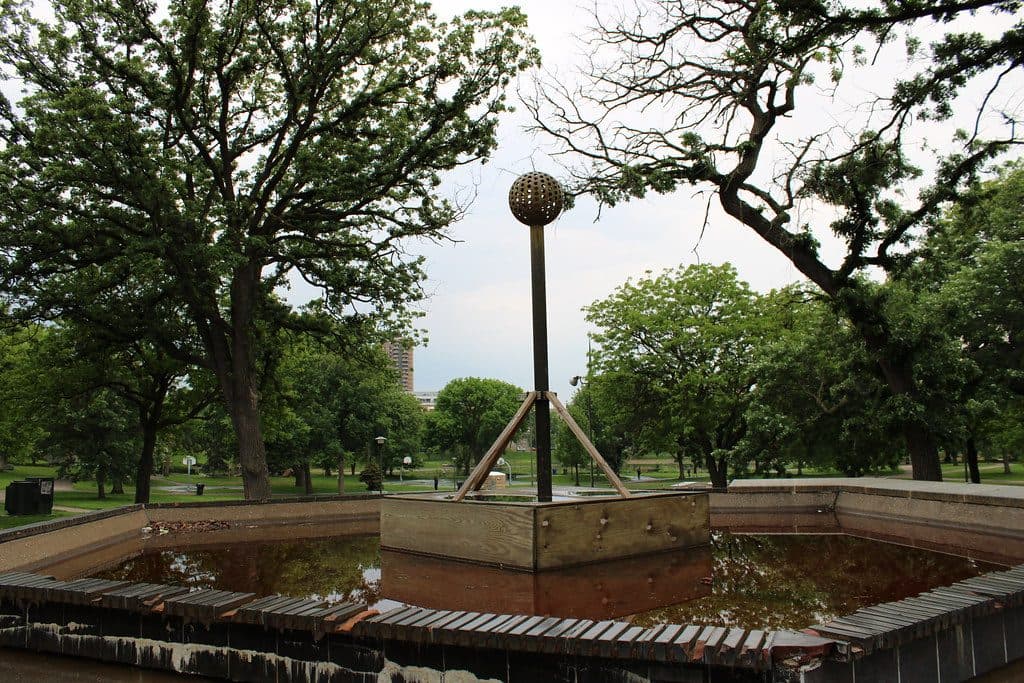
The end is in sight for Loring Park dandelion fountain's drought
State lawmakers approved $1.8 million for Berger Fountain repairs, and Park Board crews have begun demolition at the dry Loring Park landmark.
The neighborhood, in your inbox
Free. No paywall. Pick the topics you want — we send what’s happening this week.