NeighborhoodLowry Hill
The Walker's Striking Form Is Part of the Art
The Walker Art Center's form on the edge of Lowry Hill, from Edward Larrabee Barnes's 1971 building to the 2005 Herzog & de Meuron expansion, is treated as part of the museum's argument.
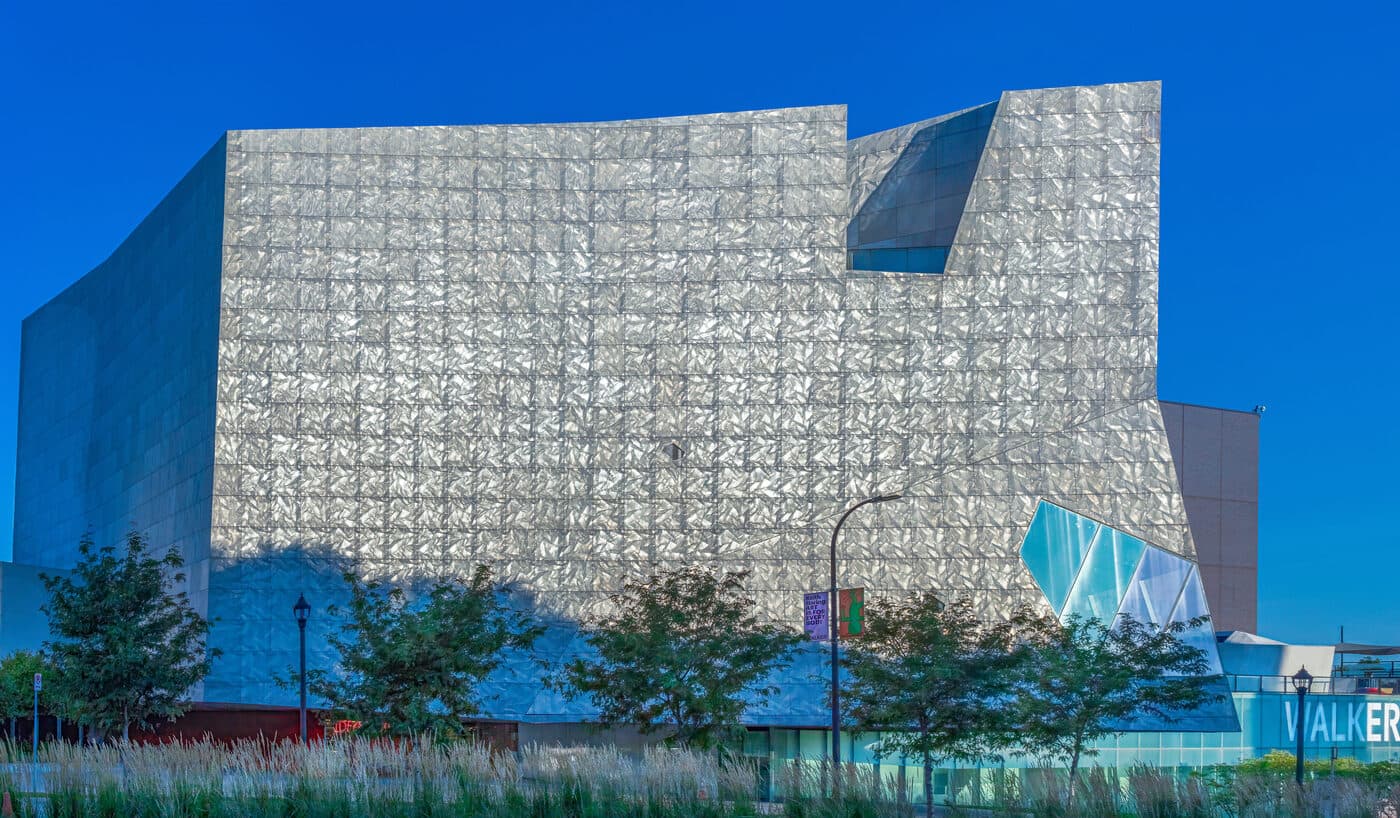
Before a visitor sees a single work inside, the Walker Art Center has made its first impression. The museum's form on the edge of Lowry Hill registers from the street, a fixture of the local skyline nearly as recognizable as Spoonbridge and Cherry across the road. For an institution devoted to contemporary art, the building is part of the argument it makes.
The campus reads as a sequence of statements. Edward Larrabee Barnes designed the original purple-brick building, which opened in 1971. In 2005, Swiss architects Jacques Herzog and Pierre de Meuron completed a $67 million expansion, adding a tower clad in embossed, folded aluminum mesh that shifts with the light. The ambition extends to how the museum meets its surroundings: the 2017 reconstruction that reopened the adjacent Minneapolis Sculpture Garden, a partnership with the Minneapolis Park and Recreation Board, added a new entry pavilion and an Upper Garden meant to stitch the museum, the garden and the streets into a single campus.
For the neighborhood, the building does practical work beyond looking striking. It functions as an orientation point, the place where Lowry Hill's residential blocks give way to the cultural campus of the Walker and its garden. Give directions anywhere near the hill and the building is the natural reference. A museum built to provoke would ring hollow behind a timid facade; the form is the opening line of an argument the galleries then go on to make.
NeighborhoodLowry Hill
Related stories
Neighborhood
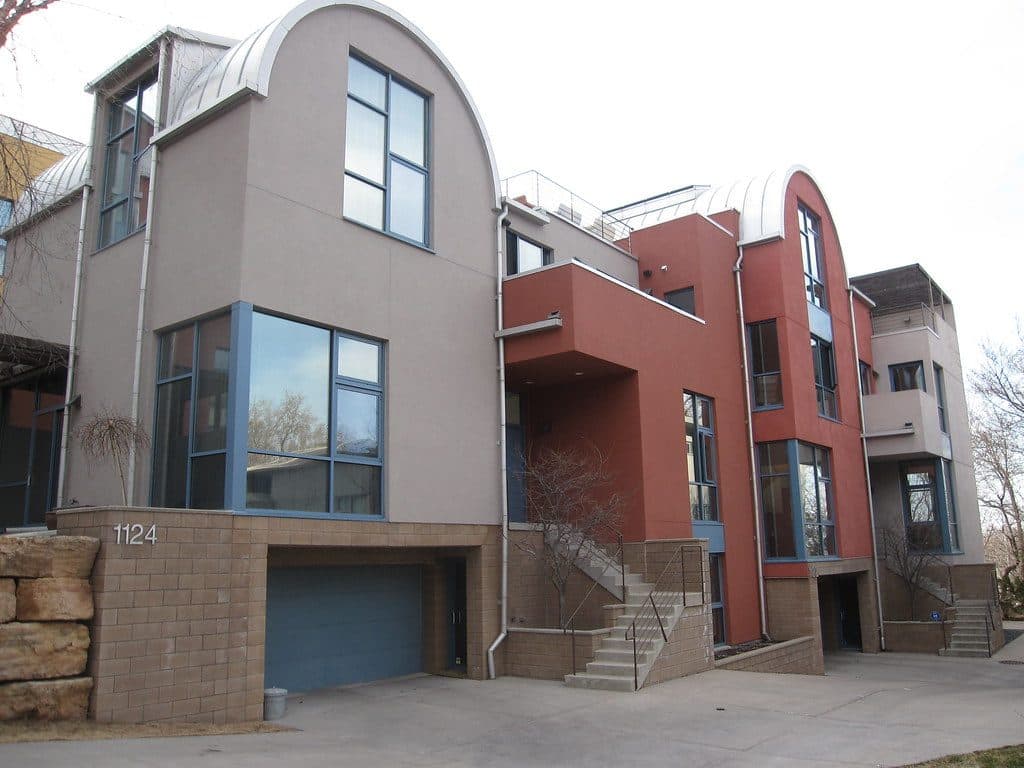
Lowry Hill and East Isles Land on Patch's List of Minnesota's Most Expensive Neighborhoods
Lowry Hill and East Isles rank among Minnesota's most expensive neighborhoods according to Patch's analysis of Niche's 2026 data.
Neighborhood
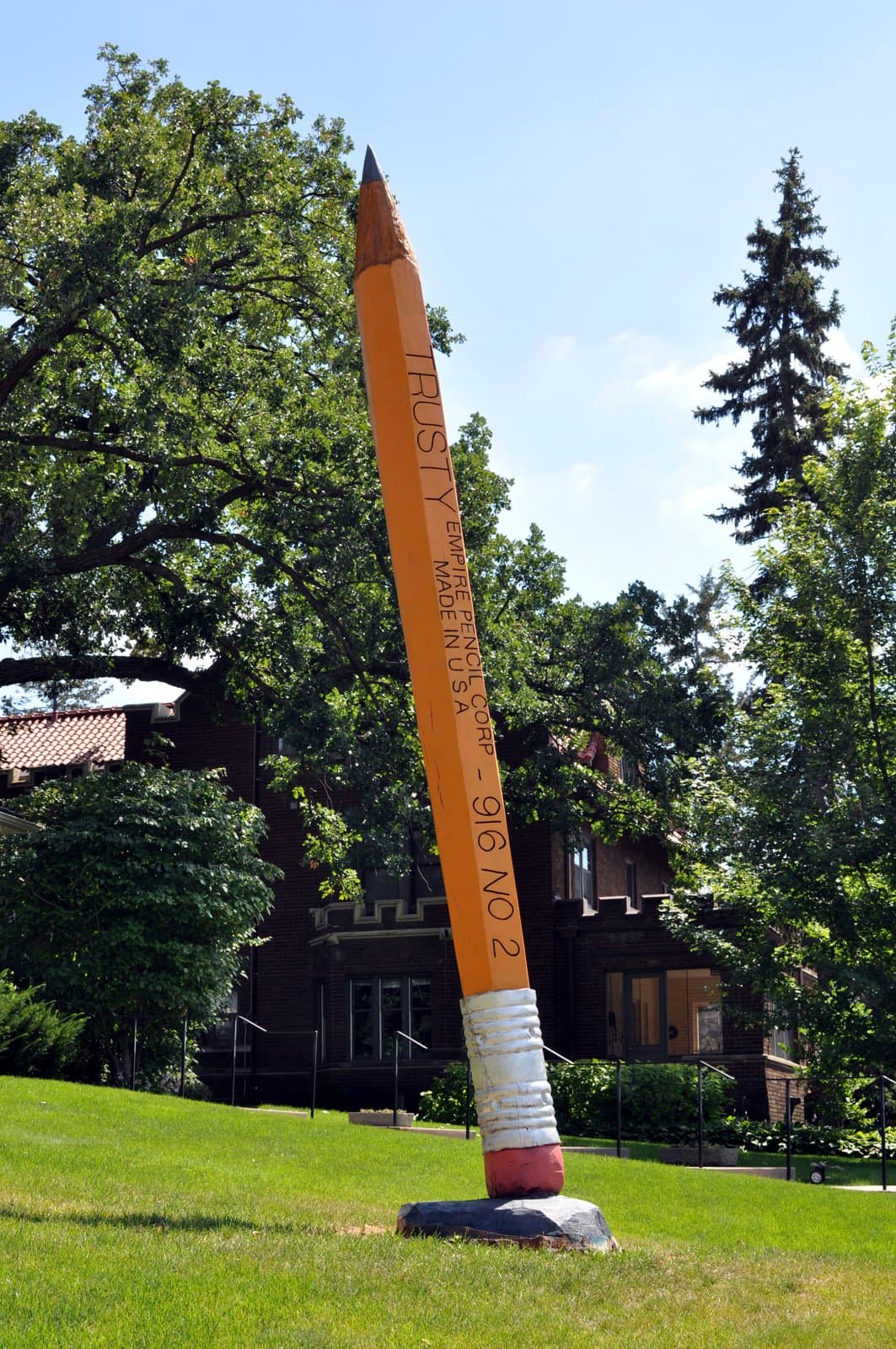
Community celebrates Lake of the Isles Pencil's 5th sharpening
Thousands gathered in East Isles on June 6, 2026, to watch the annual ceremonial sharpening of Minneapolis' giant pencil sculpture.
Neighborhood
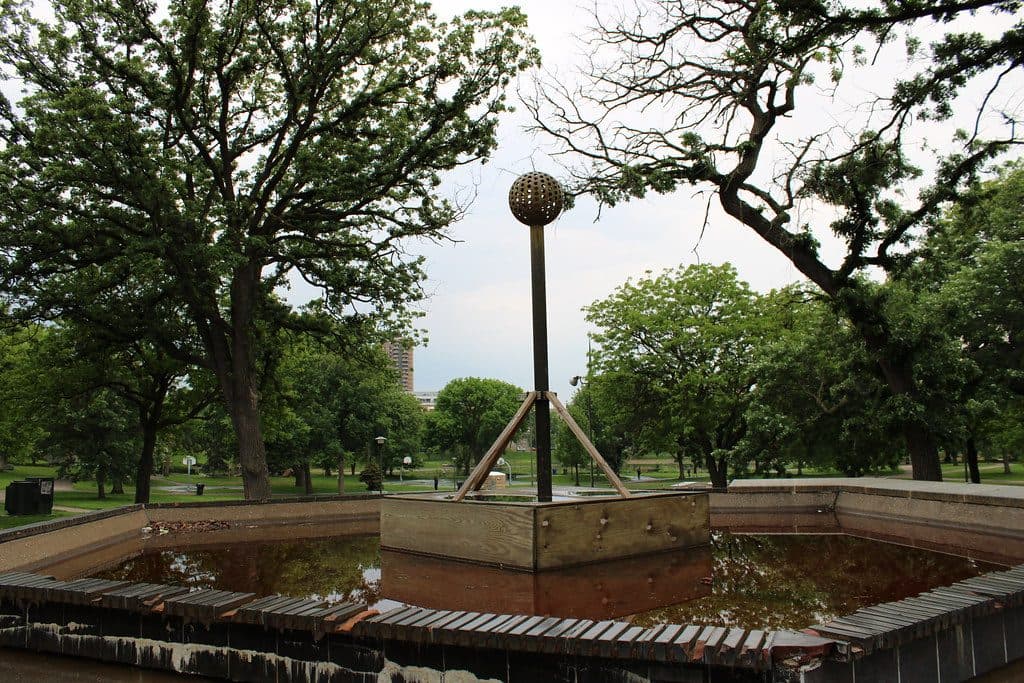
The end is in sight for Loring Park dandelion fountain's drought
State lawmakers approved $1.8 million for Berger Fountain repairs, and Park Board crews have begun demolition at the dry Loring Park landmark.
The neighborhood, in your inbox
Free. No paywall. Pick the topics you want — we send what’s happening this week.