NeighborhoodEast IslesCedar-Isles-DeanLake of the Isles
A Walk Through the History Written on the Shoreline
The shoreline of Lake of the Isles records more than a century of decisions, from the late-1800s dredging that turned a marsh into open water to recent shoreline restoration.

The shoreline of Lake of the Isles records more than a century of decisions, layered one on top of another. Before that work, the Dakota knew the place as Wíta Tópa, or "Four Islands," for the islands in the small lake that preceded today's basin.
The deepest layer is the dredging that reshaped the lake. Beginning in the late 1880s and continuing into the early 1890s, the predecessor of the Minneapolis Park and Recreation Board dredged the small lake and an adjacent marsh, using the peat and silt to build roughly 36 acres of surrounding parkland. A later round of dredging between 1907 and 1911 removed about half a million cubic yards of material and created the Kenilworth Lagoon, connecting Lake of the Isles to Cedar Lake.
That fill never fully settled, and combined with decades of urban runoff it left the lake with eroding banks and degraded water quality. In 2001 the Park Board began a major project to improve the water quality of the 120-acre lake, stabilize its shorelines and repair parkland damaged by a 1997 flood. The MPRB's plan for Cedar Lake and Lake of the Isles continues to guide that restoration.
The history is cultural as much as environmental. The lake, the Kenilworth corridor and the regional trails that thread it carry layered stories, from the Dakota who knew this country long before the dredges arrived to the cyclists on the corridor today.
Knowing that history changes how the loop feels underfoot. The formal lawns recall the parkway era; the carved bays and open water recall the dredging; the looser, native banks mark the restoration of recent decades. Each stretch is a different layer of the same long record, and every project under the current plan adds the layer the next generation of walkers will read.
NeighborhoodEast IslesCedar-Isles-DeanLake of the Isles
Related stories

Neighborhood
Lowry Hill and East Isles Land on Patch's List of Minnesota's Most Expensive Neighborhoods
Lowry Hill and East Isles rank among Minnesota's most expensive neighborhoods according to Patch's analysis of Niche's 2026 data.

Neighborhood
Community celebrates Lake of the Isles Pencil's 5th sharpening
Thousands gathered in East Isles on June 6, 2026, to watch the annual ceremonial sharpening of Minneapolis' giant pencil sculpture.
Neighborhood
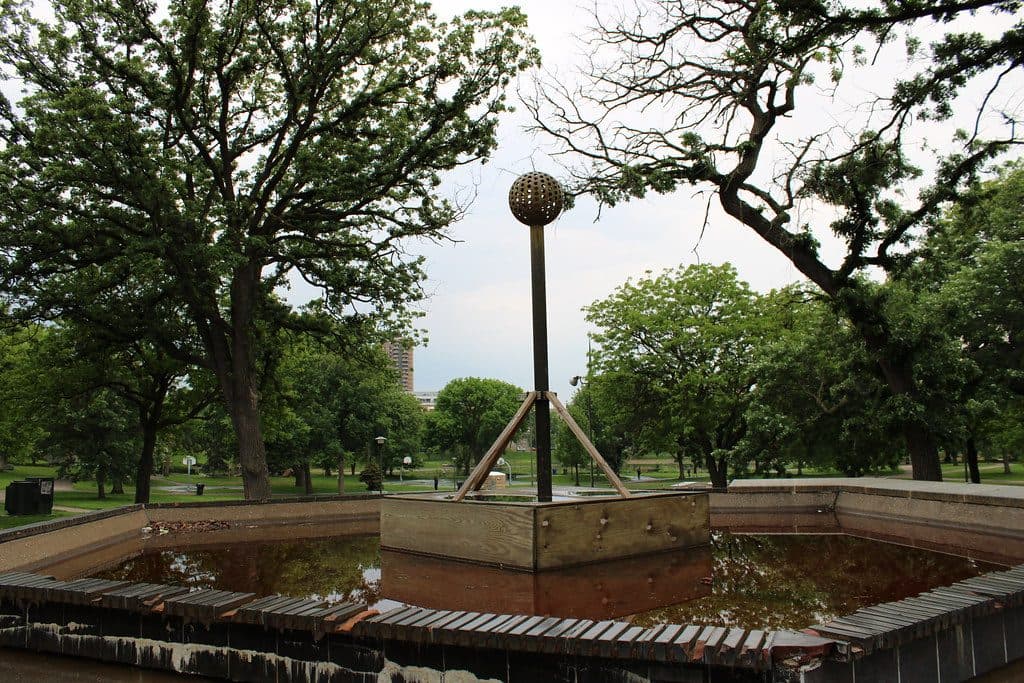
The end is in sight for Loring Park dandelion fountain's drought
State lawmakers approved $1.8 million for Berger Fountain repairs, and Park Board crews have begun demolition at the dry Loring Park landmark.
The neighborhood, in your inbox
Free. No paywall. Pick the topics you want — we send what’s happening this week.