NeighborhoodLowry Hill
Mount Curve Avenue's Mansion Row Still Crowns the Hill
More than a century after lumber barons built their estates along the ridge, Mount Curve Avenue remains the architectural spine of Lowry Hill.
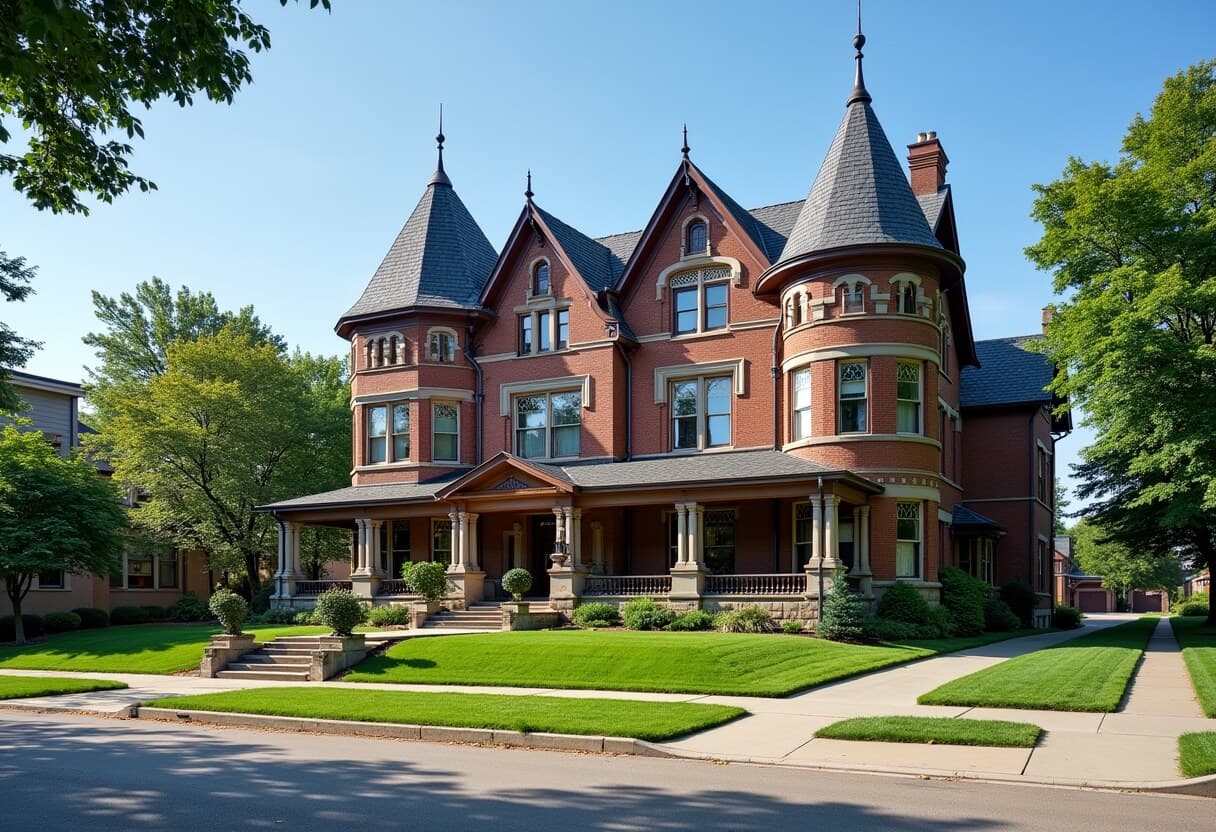
By 1906, the lots fronting Mount Curve Avenue, Groveland Terrace and the nearby blocks were the addresses of some of the most expensive houses in Minneapolis. The extension of the electric streetcar along Hennepin Avenue and westward along Douglas Avenue had touched off a real-estate boom on the hill in the 1890s, and within a decade the ridge had filled with the homes of lumber, milling and merchant families who moved up from the smoke of the riverfront and the downtown core. The Lowry Hill Neighborhood Association's own history records that the look took hold by 1900: broad lawns, boulevard shade trees and well-spaced houses, with a neighborhood standard of a spacious two-and-one-half-story home with deep porches and elaborate exterior detail. It largely remains so today.
The architects who shaped the street are still household names among preservationists. William Channing Whitney, who designed the landmark Charles J. Martin House at 1300 Mount Curve, worked the avenue, as did the firm of Kees and Colburn, responsible for the 1906 Donaldson mansion. What makes Mount Curve unusual among grand American avenues is how intact it is: block after block of the original estates survive, many still in single-family use, their carriage houses and stone walls reading like a built catalog of turn-of-the-century American taste.
The avenue follows the crown of the hill, and the homes on its north side look out over the basin that holds downtown Minneapolis. That topography is exactly why the wealthy chose it: the hill caught the breeze, sat above the smoke of the milling district, and offered a prospect over the growing city below. Today the same ridge gives residents and visitors one of the best vantage points in the city, a fact not lost on the architects who oriented the grandest rooms of these houses toward the skyline.
Mount Curve's intactness is not an accident. Several of its houses carry National Register or city-landmark status, and the surrounding neighborhood's stewardship — much of it organized through the Lowry Hill Neighborhood Association — has kept the avenue from the demolition that thinned grand streets in other American cities. The association holds monthly board meetings — recently on Tuesday evenings from 6:30 to 8 p.m. — and invites every resident 16 and older to attend and get on the agenda.
Preservationists and longtime owners tend to describe the avenue the same way: as a responsibility more than a trophy. Slate roofs, leaded glass and carriage houses are expensive to keep, and the people who live there increasingly frame their work as holding the line for the next century, not just enjoying the view from this one. What sets Mount Curve apart from grand avenues that became museums is that it is still lived in: many of the original estates remain single-family homes, their owners cycling slate roofs and storm windows through the seasons rather than roping them off behind velvet. A street kept in use, neighbors note, is a street with a constituency — people with a direct stake in seeing the next owner maintain the standard rather than tear down and start over.
NeighborhoodLowry Hill
Related stories
Neighborhood
Lowry Hill and East Isles Land on Patch's List of Minnesota's Most Expensive Neighborhoods
Lowry Hill and East Isles rank among Minnesota's most expensive neighborhoods according to Patch's analysis of Niche's 2026 data.

Neighborhood
Community celebrates Lake of the Isles Pencil's 5th sharpening
Thousands gathered in East Isles on June 6, 2026, to watch the annual ceremonial sharpening of Minneapolis' giant pencil sculpture.

Neighborhood
The end is in sight for Loring Park dandelion fountain's drought
State lawmakers approved $1.8 million for Berger Fountain repairs, and Park Board crews have begun demolition at the dry Loring Park landmark.
The neighborhood, in your inbox
Free. No paywall. Pick the topics you want — we send what’s happening this week.