NeighborhoodLowry Hill
Inside the Charles J. Martin House, Lowry Hill's Landmark on the Hilltop
The 1903 Renaissance Revival mansion at 1300 Mount Curve sits on nearly an acre at the highest point in Minneapolis.
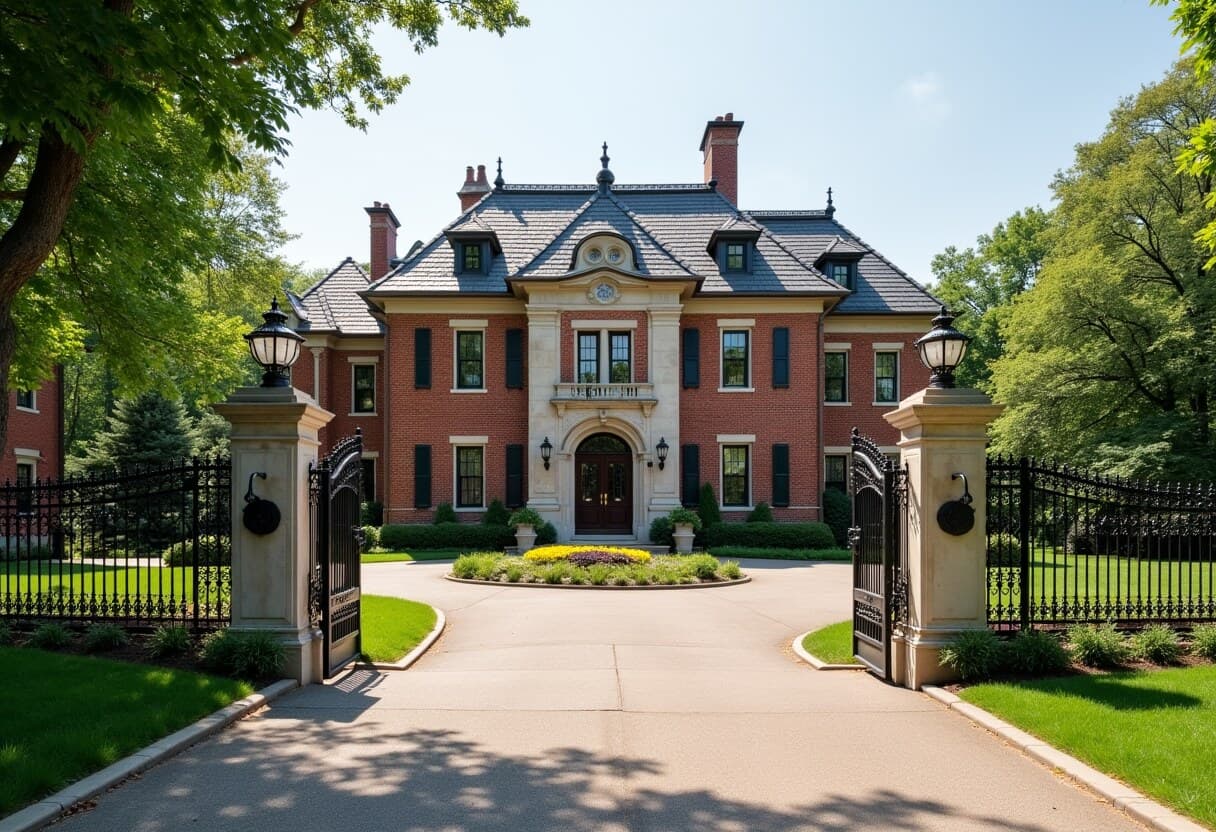
The Charles J. Martin House, completed in 1903 in the Renaissance Revival style, is one of the best-preserved examples of an early-twentieth-century urban estate anywhere in the city. Designed by the prominent Minneapolis architect William Channing Whitney, the mansion and its grounds occupy almost a full acre at 1300 Mount Curve Avenue, and the property was added to the National Register of Historic Places on April 26, 1978. It is also a designated city landmark.
The house is enormous by any measure, with roughly 14,300 square feet of floor space, ten bedrooms, eleven bathrooms and the kind of richly detailed living and dining rooms that the milling fortunes of the era could pay for. A gracious foyer and library anchor the main floor.
It was built for Charles J. Martin, an executive in the milling and insurance world whose fortune was typical of the families who claimed the ridge. The semicircular drive, the ornamental wrought-iron fence and the double set of gates that historians describe were as much a statement of arrival as the house itself.
Why it sits where it does
The Martin House occupies what is generally cited as the highest point in Minneapolis, a siting that was no accident. The families who built on Mount Curve wanted the view, the air and the prominence that came with the ridge.
Preservationists prize the house precisely because so little has been stripped from it. Where many estates of its era were carved into apartments or lost their outbuildings, the Martin House retains the integrity that earned it landmark status. Preservation groups such as the Healy Project have used open houses there to make the case that Lowry Hill's grand interiors, not just its facades, are worth protecting.
Why it still matters
The Martin House has changed hands rarely, coming to market only a handful of times in the past century. When it most recently sold, after some thirty-five years with one owner, it carried an asking price in the multimillion-dollar range, a reflection both of its scale and of its place at the literal high point of the neighborhood. Each sale has drawn citywide attention precisely because so few houses of its scale survive intact.
City landmark status adds a layer of formal protection on top of the National Register listing, meaning significant exterior changes face review. For neighbors, the house functions as a kind of anchor: it sits at the hill's high ground, it is visible from the parkways below, and it sets the standard against which the rest of the avenue is measured.
More than a century on, the Martin House remains exactly what its builder intended: the most conspicuous address on the most conspicuous street of one of Minneapolis's grandest neighborhoods.
NeighborhoodLowry Hill
Related stories
Neighborhood
Lowry Hill and East Isles Land on Patch's List of Minnesota's Most Expensive Neighborhoods
Lowry Hill and East Isles rank among Minnesota's most expensive neighborhoods according to Patch's analysis of Niche's 2026 data.

Neighborhood
Community celebrates Lake of the Isles Pencil's 5th sharpening
Thousands gathered in East Isles on June 6, 2026, to watch the annual ceremonial sharpening of Minneapolis' giant pencil sculpture.

Neighborhood
The end is in sight for Loring Park dandelion fountain's drought
State lawmakers approved $1.8 million for Berger Fountain repairs, and Park Board crews have begun demolition at the dry Loring Park landmark.
The neighborhood, in your inbox
Free. No paywall. Pick the topics you want — we send what’s happening this week.