CityLowry HillLowry Hill East (The Wedge)East Isles
New E Line Stations Reshape the Hennepin Corridor
The E Line replaced Route 6's sign-on-a-pole stops with permanent bus rapid transit stations along its 13.3-mile route, including ones at Hennepin and Franklin and Hennepin and 25th Street.
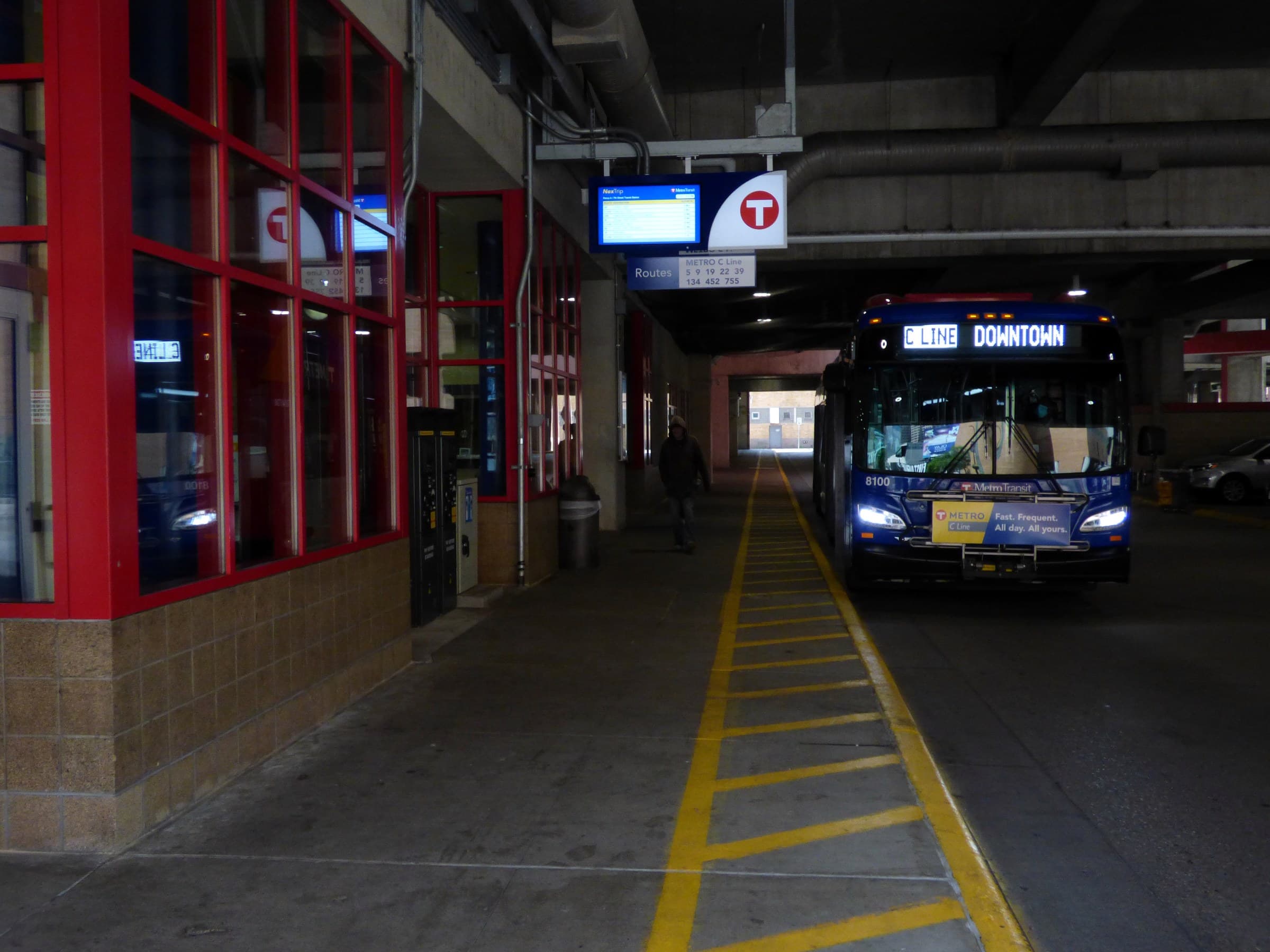
One of the most visible changes the E Line brought to Hennepin Avenue is the stations themselves. In place of the sign-on-a-pole stops that marked Route 6, Metro Transit built purpose-built bus rapid transit stations along the 13.3-mile corridor from the Southdale Center Transit Center in Edina to Westgate Station in St. Paul, among them Hennepin & Franklin and Hennepin & 25th Street, which serve the East Isles, Lowry Hill and Lowry Hill East neighborhoods.
The difference is more than cosmetic. The stations are spaced farther apart than the old local stops and built for level boarding and off-board fare payment, so buses no longer idle while riders file on and pay one by one. Those choices are part of why Metro Transit expects the E Line to run up to 20 percent faster on average than Route 6, which on the Hennepin stretch between downtown and Uptown was in motion only 39 percent of the time and at points averaged about 6 miles per hour.
The stations are the centerpiece of a $64 million project, of which the state of Minnesota committed $60 million in 2021. They arrived alongside the reconstruction of Hennepin Avenue itself, which reopened in October 2025 after roughly two years of construction. The avenue was rebuilt around the line, with more than three miles of dedicated bus lanes, rather than having transit tacked onto the curb afterward.
"The E Line isn't just a bus route -- it's a lifeline for thousands of people," Metropolitan Council Chair Robin Hutcheson said when the line opened Dec. 6, 2025. For neighbors, the stations are the clearest sign the bus has changed: that kind of visible permanence tends to anchor foot traffic and businesses nearby the way rail stops do.
[unverifiable: Metro Transit's published materials describe enhanced shelters with real-time arrival signs but do not confirm that E Line shelters are heated; the original "34 stations" count could not be verified against official station lists.]
CityLowry HillLowry Hill East (The Wedge)East Isles
Related stories
City
Parkway, intersection and pedestrian ramp improvements begin at Lake Harriet this year
Work to resurface Lake Harriet Parkway and improve the William Berry Parkway intersection will occur in phases starting in 2026.
City
Minneapolis Park and Recreation Board working on repairs at Northeast Ice Arena with goal of reopening in the fall
Minneapolis Park and Recreation Board plans to repair Northeast Ice Arena with a goal of reopening for the ice season this fall.

City
Algae at Minneapolis Lakes
The Minneapolis Park & Recreation Board issued an announcement about algae growth at city lakes following recent high temperatures.
The neighborhood, in your inbox
Free. No paywall. Pick the topics you want — we send what’s happening this week.